Storm Damage Roof Repair in Fort Collins, CO
Commercial Roofing
Commercial Roofing Services
Storm Damage Roof Repair for Fort Collins Commercial Buildings
Front Range hail season runs late spring into midsummer, and the storms that come through the Poudre Valley don't announce themselves. One pass of a hail cell can leave a membrane scarred and a metal edge dented in fifteen minutes. We repair what those storms do to commercial roofs across Fort Collins and Larimer County, from the first walk after the storm clears to the last flashing seam closed out.
What a Front Range Hail Cell Actually Does to a Roof
Hail out here doesn't behave the same way on every roof type, and it doesn't hit every roof the same way twice. A cell that tracks up the I-25 corridor from Loveland through Timnath and into north Fort Collins can drop stones the size of golf balls in one lane and leave a building two blocks over untouched. We've walked roofs where the north slope shows heavy bruising and the south slope, out of the wind, is nearly clean.
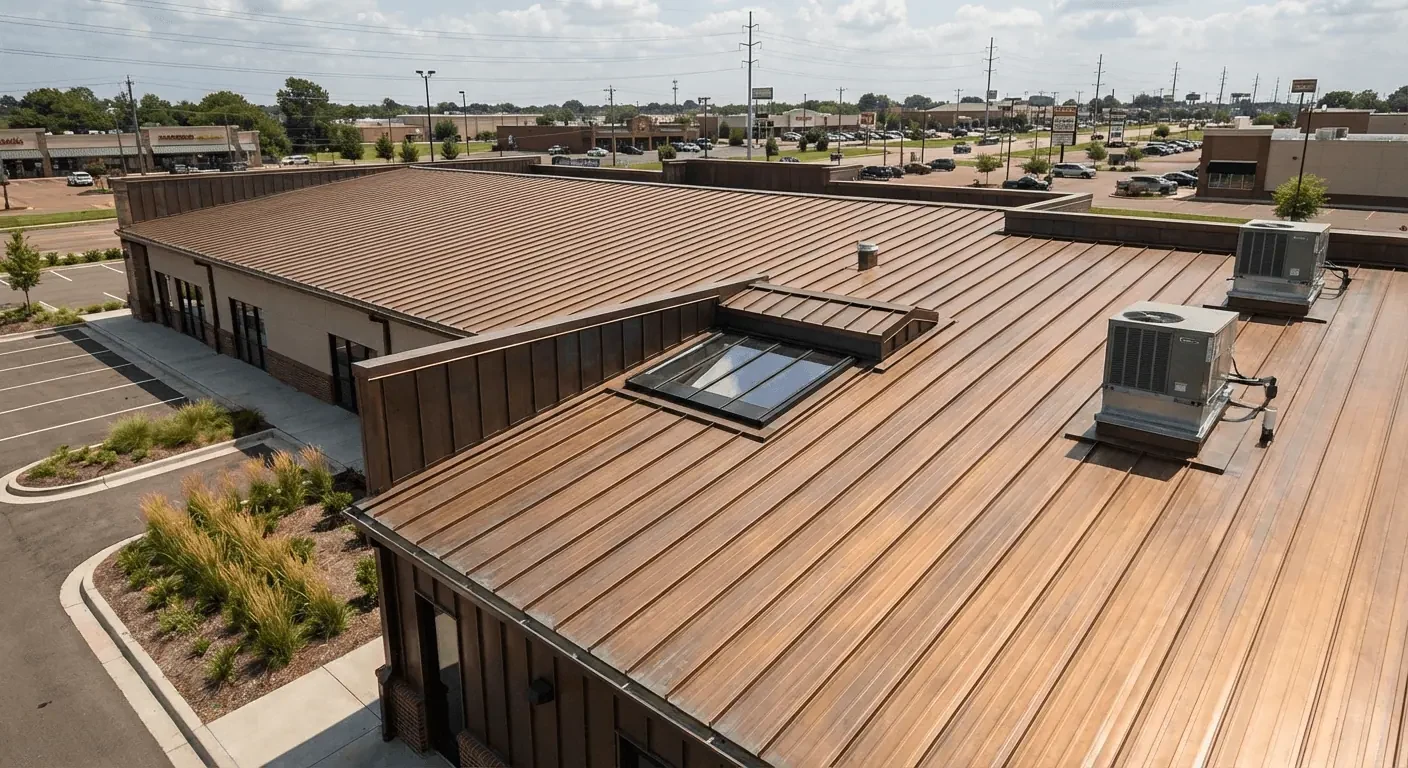
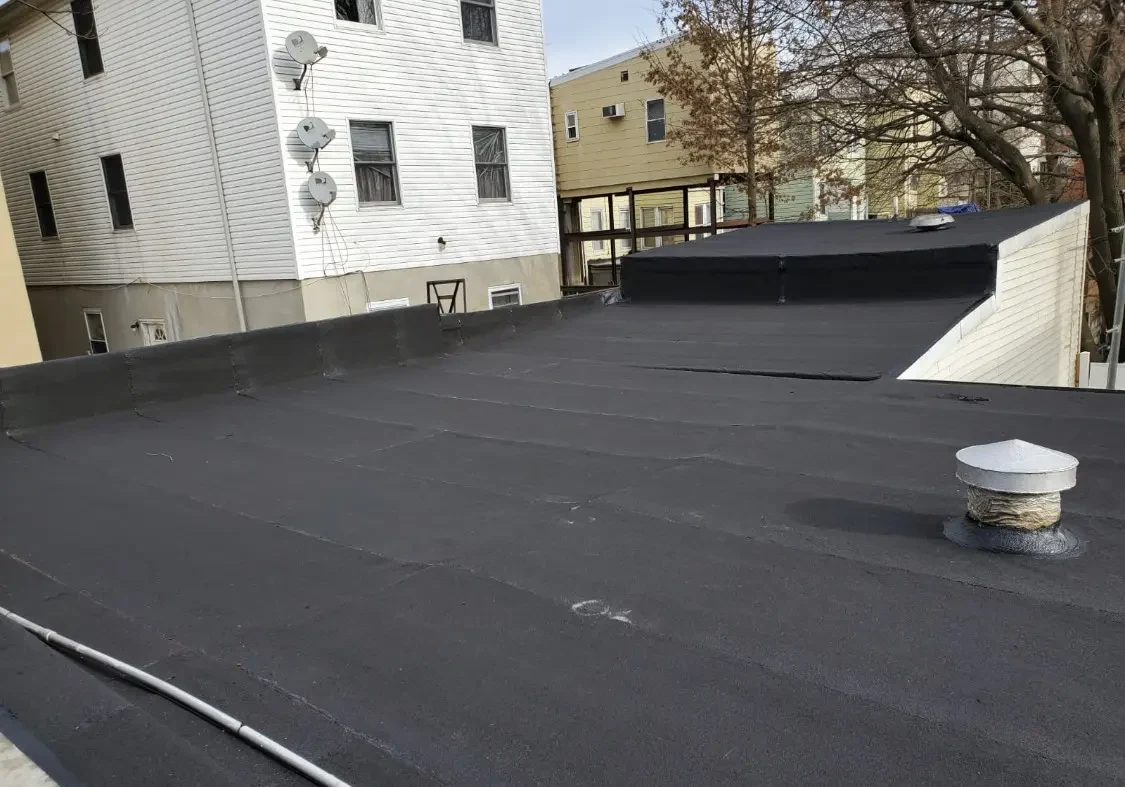
On single-ply membranes, hail impact shows up as circular bruising, fractured scrim, or in the worst cases a puncture straight through the sheet. On built-up and modified bitumen systems, the granule surface gets stripped and the underlying felt can split. Metal roofs and metal edge take dents and, depending on gauge, actual perforation at seams and fasteners. We check the whole assembly, penetrations and seams included, because the damage that leaks first is usually at a detail, not in the open membrane field.
Cosmetic Damage Versus Functional Damage
This is the distinction that matters most and the one that gets argued over the most. Cosmetic hail damage marks the surface without breaking the roof's ability to shed water — granule loss on a cap sheet, minor dimpling on a coated surface. Functional damage compromises the waterproofing itself — a split membrane, a cracked seam, a punctured panel, exposed felt on a BUR cap. Both matter, but they don't get treated the same way, and they don't get repaired the same way.
We document both categories separately on every storm inspection. A roof can have plenty of cosmetic hits and still be sound, and we'll say so. A roof can have a handful of impacts that are purely functional failures needing immediate repair even if the overall surface looks fine from the ground. We're not going to call something functional damage that isn't, and we're not going to wave off something that is.
Sequence: Assess, Stabilize, Repair
The first move after a storm is assessment, not repair. We walk the roof, mark every impact point, photograph the field and the details, and check drains and scuppers for granule buildup that can back up water fast during the next rain. If there's active water intrusion, stabilization comes next — tarping, temporary patching, sealing open seams — covered in more detail on our emergency tarp and dry-in service.
Once the building is dry and stable, we move to permanent repair. That might mean localized membrane patching at each functional impact, replacement of damaged metal edge and coping, or in cases where impact density is high across the field, a full reroof. We don't default to the biggest scope of work — we repair what the roof actually needs based on what the inspection found, and we tell owners plainly when a patch job is the right call versus when it isn't.
Wind Damage Alongside Hail
Front Range storm cells often carry wind gusts along with hail, and the two together do different damage than either alone. Wind can lift membrane at the perimeter where fastening is weakest, tear coping caps loose, and peel back edge metal that's already been weakened by corrosion or age. We check perimeter attachment and edge details on every storm call, because wind uplift damage doesn't always show from the ground and it's often where the next leak starts.
Buildings near open ground — warehouse and distribution roofs out toward Windsor and Timnath, ag processing facilities near Greeley and Evans — tend to see higher wind exposure than sheltered roofs in denser parts of town like Old Town or Midtown. We factor site exposure into how we prioritize the walk.
What We Document and Why It Matters
Every storm-damage inspection produces a written record: photos of each impact point, measurements where relevant, notes on membrane type and roof age, and a summary of cosmetic versus functional findings. This record is what supports whatever comes next, whether that's a repair scope, a conversation with a property manager, or a claim your insurer is reviewing. We don't estimate claim outcomes and we don't promise what an adjuster will approve — our job is to document the roof accurately and let that documentation speak for itself. More on how we handle that process is on our insurance documentation page.
- Impact mapping across the full roof field, including slopes hidden from ground view
- Separate cosmetic and functional damage classification
- Photo documentation at each impact point with location reference
- Drain and scupper check for granule and debris blockage
- Perimeter and edge metal inspection for wind-related lift or separation
- Written repair scope prioritized by what the roof actually needs
Timing After a Storm
We don't wait for a callback list to fill up before we start walking roofs after a hail event. Buildings with active leaks get priority, but every property we're asked to look at gets on the schedule fast, because granule loss and open seams get worse with every rain that follows, not better. If a roof needs stabilization before a full assessment can happen, we handle that first and document the rest once the building is secure.
Storm Damage Questions From Fort Collins Property Owners
How do I know if hail actually damaged my roof or just marked it up?
That's exactly what a post-storm inspection is for. We check for scrim fracture, split membrane, and exposed underlayment beyond the surface marking, and we tell you which impacts are cosmetic and which need repair.
Do all hail impacts need immediate repair?
No. Cosmetic damage can often be monitored rather than repaired on the spot. Functional damage — anything that breaks the waterproofing — gets prioritized because it's a leak risk with the next rain.
Can you inspect a roof if I wasn't the one who called about storm damage — say, my property manager was?
Yes. We work directly with owners, property managers, and whoever holds responsibility for the roof. We just need access and someone who can receive the report.
What if the storm damaged the roof but there's no visible leak yet?
Common situation. Functional damage doesn't always leak right away — it leaks on the next hard rain or when wind drives water sideways into a compromised seam. We repair based on what the inspection finds, whether or not it's actively dripping the day we walk the roof.
Will you work with my insurance adjuster during the assessment?
We can walk the roof alongside an adjuster and provide our documentation for their review. We stick to describing what's on the roof — we don't speak for the insurer or predict how a claim will be handled.
Roof
GALLERY