Higher Education Roofing in Fort Collins, CO
Commercial Roofing
Commercial Project Types
Working Roofs on CSU and Fort Collins College Buildings
Colorado State University runs one of the biggest rooftop inventories in northern Colorado, and it is not one roof, it is dozens of different systems from different decades stitched together across a working campus. We have crawled enough of them to know that a lab building fifty yards from a residence hall can have completely different roof problems, and the fix has to respect what is happening underneath both.
Rooftop Mechanical Loads on Lab and Research Buildings
Research buildings on and around campus carry fume hood exhaust, lab air handlers, and specialty ventilation that a standard office roof never sees. Every one of those units means a curb, a penetration, and a flashing detail that has to hold up under constant thermal cycling from equipment that runs around the clock.
We flash those penetrations to match the membrane system already on the roof rather than force a generic detail that fights the existing field. On older built-up sections we still find near science buildings, that means matching bitumen compatibility so a coating or repair does not delaminate in year two.
Vibration from lab exhaust fans loosens screws and works flashing loose faster than people expect. We check fastener patterns around mechanical curbs on every inspection instead of waiting for a leak to show up inside a classroom or lab below.
Working Around the Academic Calendar
Nobody wants a crew running a tear-off over a classroom during finals week, and we do not schedule that way. Most of our campus and college-adjacent reroof work gets planned for the window between spring commencement and the start of fall semester, when buildings are empty or close to it.
That compresses the timeline. A roof that might take six weeks on a normal commercial schedule sometimes has to happen in four, so we sequence material delivery and crew size around that constraint instead of asking the building to work around us.
Noise and dust matter too, even in summer, because summer session classes and camps still use parts of campus. We coordinate access and lay down protection at entries so foot traffic below is not walking through roofing debris.
Front Range Hail Alley and Storm Exposure
Northern Colorado sits in what insurance adjusters call hail alley, and CSU's flat and low-slope roofs take that exposure directly. A hailstorm that dents a car in a parking lot is doing the same thing to membrane, coping, and rooftop units on every building on that side of campus.
After a storm we document impact patterns building by building, because hail damage on a membrane roof does not always show as an obvious puncture. Bruising and granule loss on modified bitumen, or scarring on a TPO field, can take months to turn into a leak if it is not caught early.
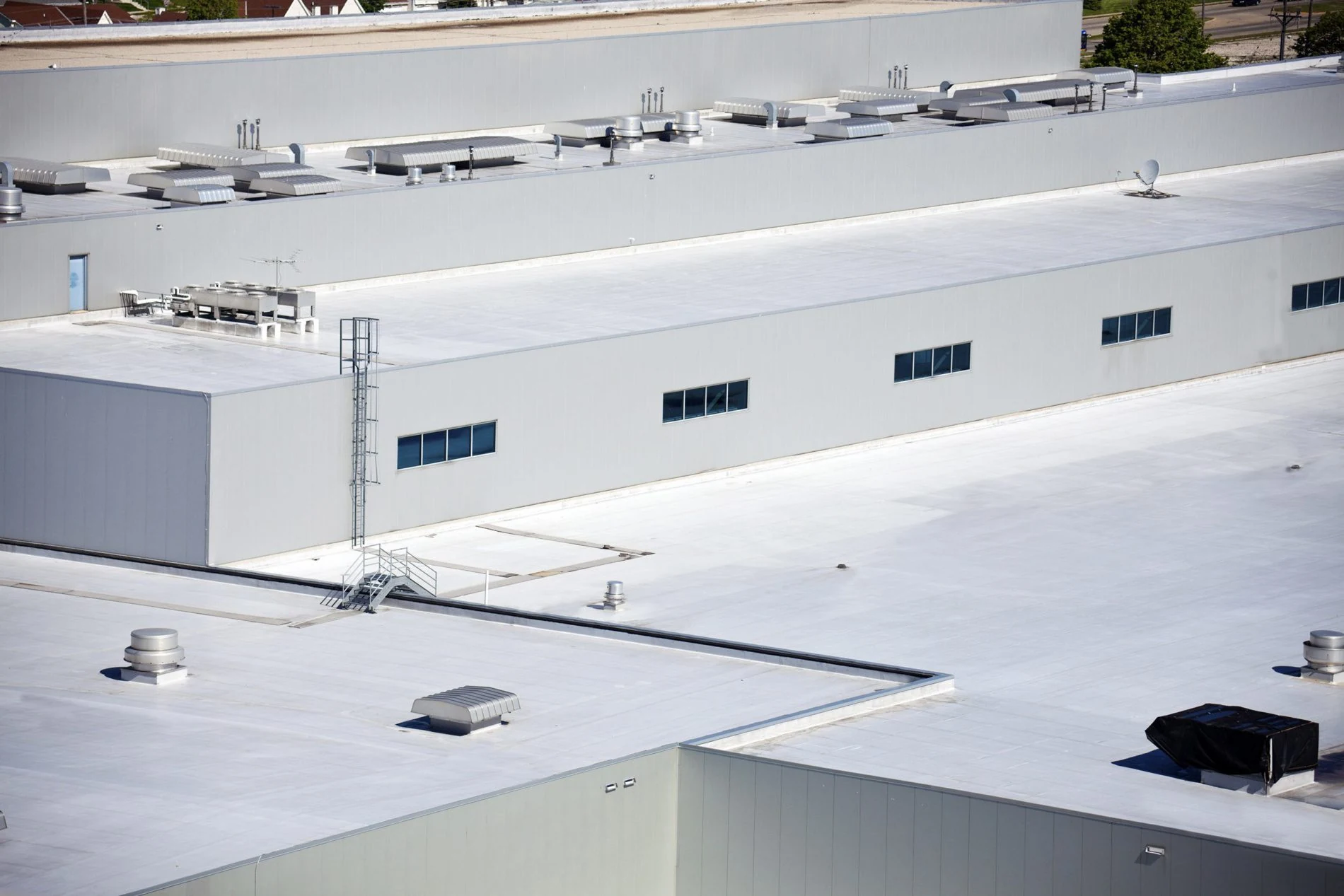
- Academic and administration buildings with large flat TPO or EPDM fields
- Science and engineering labs with heavy exhaust and specialty air handling
- Residence halls and student housing with high occupancy and tight access windows
- Dining halls and student unions with kitchen exhaust and grease considerations
- Athletics and recreation facilities with long clear-span roof structures
- Parking structures and covered walkways with exposed metal and coping details
Dormitory and Student Housing Roof Conditions
Residence hall roofs get more foot traffic than most people assume, from maintenance staff servicing rooftop units to cable and antenna work. That traffic wears membrane faster around walk paths, especially near parapet walls where crews cut corners on protection.
We lay out walk pads on high-traffic routes during any reroof or major repair on student housing, because replacing a worn section of membrane in year three costs more than protecting it up front. Occupied buildings during the school year also mean water intrusion complaints move fast up the chain, so response time on housing roofs is not optional.
Standardizing Systems Across a Multi-Building Campus
A facilities department managing forty roofs wants consistency, not forty different maintenance plans. Where it makes sense, we recommend standardizing on TPO or EPDM systems that match manufacturer requirements already in place elsewhere on campus, so future repairs do not require relearning a new system every time a building comes due.
Bond-funded capital projects run on their own approval and budget cycle, and we work inside that timeline rather than pushing colleges to move faster than a board vote allows. Getting scope and pricing locked early gives facilities staff something concrete to bring to that process.
Questions Facilities Managers Ask About Campus Roofing
How do you keep a reroof from disrupting the school year?
We target summer break and low-occupancy windows for tear-offs, and we sequence crews and material staging so the heaviest disruption happens when the building is emptiest.
What roof systems hold up best against CSU's hail exposure?
TPO and PVC membranes with heavier mil thickness perform well against granular hail impact, and we size the system to the specific roof's exposure rather than defaulting to one product everywhere.
Can you work with a bond-funded capital improvement schedule?
Yes. We provide scope and budget documentation early enough for facilities staff to bring it through board approval before construction dates lock in.
Do you match existing systems when reroofing one building in a multi-building campus?
Where the existing system still performs, we match it so maintenance staff are not learning a new roof assembly on every building they manage.
How do you handle rooftop equipment tied to lab exhaust systems?
We flash and re-flash lab exhaust curbs to the existing membrane type and check fastener patterns on every inspection, since vibration from that equipment loosens hardware faster than static rooftop units.
Roof
GALLERY