Roofing Subcontractor for General Contractors in Fort Collins, CO
Commercial Roofing
Industries We Serve
A Roofing Sub General Contractors Can Actually Schedule Around
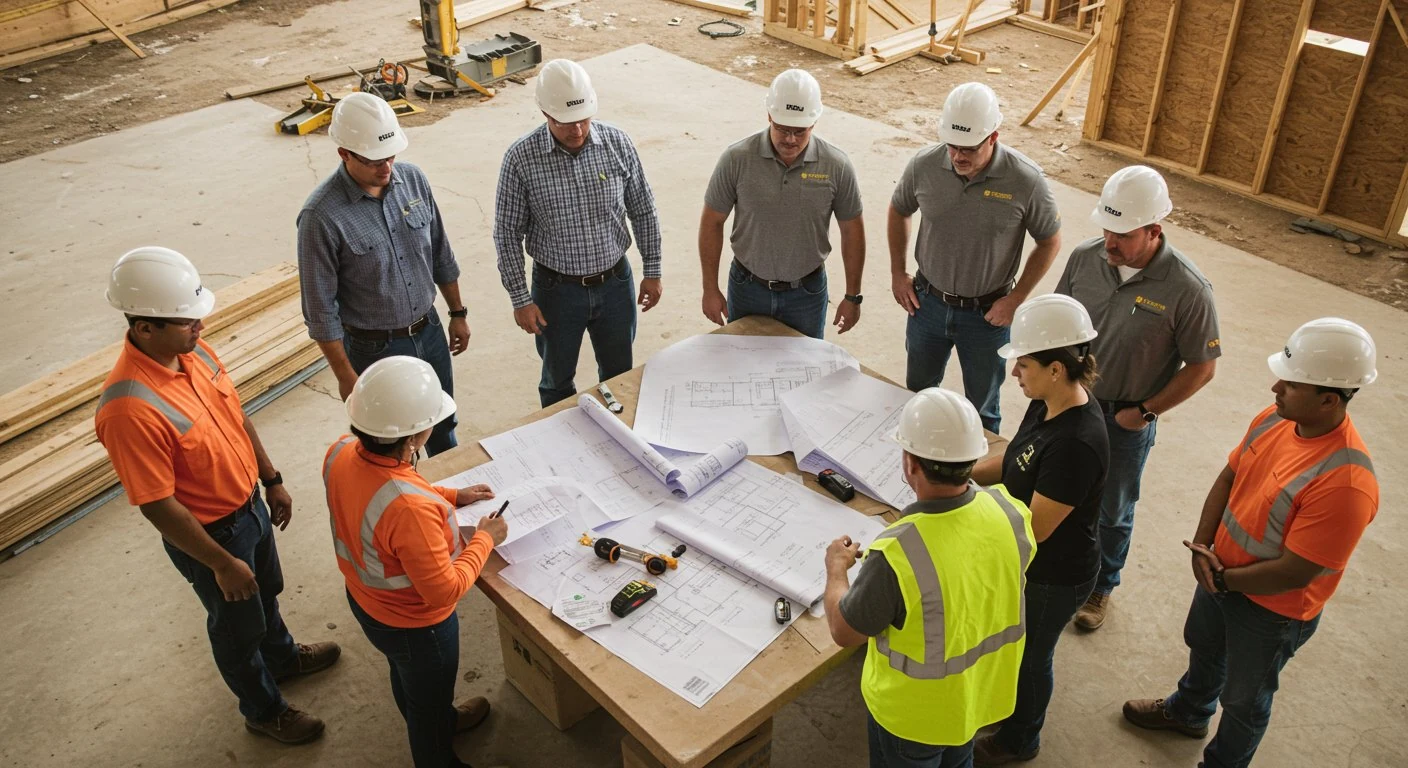
General contractors don't need a roofer who shows up when it's convenient. They need a sub who reads the master schedule, mobilizes the day the deck is dry-in ready, and clears out before the next trade needs the roof. That's the whole relationship on new construction and tenant improvement work around Fort Collins.
Bidding New Construction the Way a GC Actually Needs It
A roofing bid that shows up two weeks late or missing half the scope items in the spec doesn't help anyone hit a bid deadline. We turn bids on the drawings we're given, flag anything in the roof spec that looks like it'll create a change order later, and price alternates the way the GC's estimator actually asks for them, not in some format we made up.
On tenant improvement work inside existing buildings along Harmony Corridor and Midtown, that usually means tying a small roof section into an existing membrane that's already ten or fifteen years old. We walk that existing roof before we bid so the number we hand over reflects what's actually up there, not an assumption.
Sequencing Behind Framers and Ahead of Mechanical
On a new building, we're on site the day the deck is dry-in ready, not before and not a week after. Framers finish a section, we dry it in, and rooftop mechanical crews get a weathertight platform to set curbs and units on. Holding that sequence is most of what keeps a GC's overall schedule intact.
We coordinate curb locations and flashing details directly with whoever's setting rooftop units, so we're not cutting a hole in fresh membrane after the fact. On a project with a compressed schedule, that one conversation up front saves a week of rework later.
New Retail Pads Along the I-25 Growth Corridor
The stretch of I-25 through Timnath, Johnstown, and Severance has been in near-constant construction for the past several years. Timnath's Costco and Walmart-anchored retail growth, the 2534 development and Buc-ee's site in Johnstown, and the new retail pads going in around Severance all move on tight construction timelines with hard opening dates tied to a corporate calendar, not a contractor's convenience.
Retail pad shells on that corridor are usually TPO or PVC single-ply over steel deck, and the GC's schedule doesn't have slack built in for a roofing sub who can't hit a dry-in date. We staff those jobs to make the date, and we tell a GC early if weather or material lead times are going to threaten it instead of surprising them at the last week.
- A single roofing contact who tracks the master schedule instead of working off a start date we were told weeks ago
- Dry-in complete before the crew leaves, so a rain event doesn't put drywall or insulation below at risk
- Curb and penetration coordination with mechanical and electrical before anyone cuts the membrane
- Daily progress updates a superintendent can actually use in a schedule update meeting
- Punch list items closed out fast, not left hanging for a callback three weeks after substantial completion
- Warranty documents submitted in the format your closeout binder or O&M manual actually needs
Closeout Paperwork That Doesn't Hold Up Your Certificate of Occupancy
A roof job isn't finished when the last sheet of membrane goes down. Manufacturer warranty inspections, as-built roof plans, and closeout submittals all have to land before an owner will sign off, and a slow warranty package from a roofing sub can hold up an entire project's closeout. We file for the manufacturer inspection as soon as the roof is complete, not after someone asks where it is.
We also build our punch list responses around whatever tracking system the GC is already using, whether that's a spreadsheet, Procore, or a walk-through with a printed list. A roofing item sitting open on a punch list for a month because nobody could reach the sub is a problem we try not to create.
Recover Work on Existing GC Service Contracts
Not every job with a GC is new construction. A lot of our work comes through GCs with standing service or capital improvement contracts on buildings out toward Windsor's Great Western Industrial Park or the tech campuses and medical office buildings along Harmony Corridor, where a roof recover or partial reroof gets folded into a larger renovation scope. We work as a sub on those jobs the same way we do on ground-up construction: on the schedule, in the sequence, with paperwork that matches whatever system the GC and owner already have running.
CSU capital projects run the same way. When a reroof is bundled with mechanical or electrical upgrades on campus, we coordinate directly with whichever GC or mechanical contractor is already mobilized instead of working around them blind. See our page on education facility roofing for more on how that campus coordination works.
Questions General Contractors Ask Before Adding Us to a Bid List
Can you commit to a hard dry-in date on a compressed schedule?
Yes, and if weather or material lead times put that date at risk, we tell you as soon as we know, not the week it's due.
Do you carry the insurance and bonding a GC typically requires?
We can provide current insurance certificates and bonding information for any project that requires it, sized to the job.
How fast do you close out punch list items?
Fast. Roofing punch items are usually small in scope, and we'd rather close them same-week than let them sit and become a callback.
Will you walk an existing roof before bidding tenant improvement work?
Always, when the scope involves tying into an existing membrane. A bid based on assumptions instead of a roof walk tends to turn into a change order.
Can you handle multiple retail pad shells on the same construction timeline?
Yes. We staff to the schedule you give us and flag capacity issues early instead of letting a date slip quietly.
Roof
GALLERY