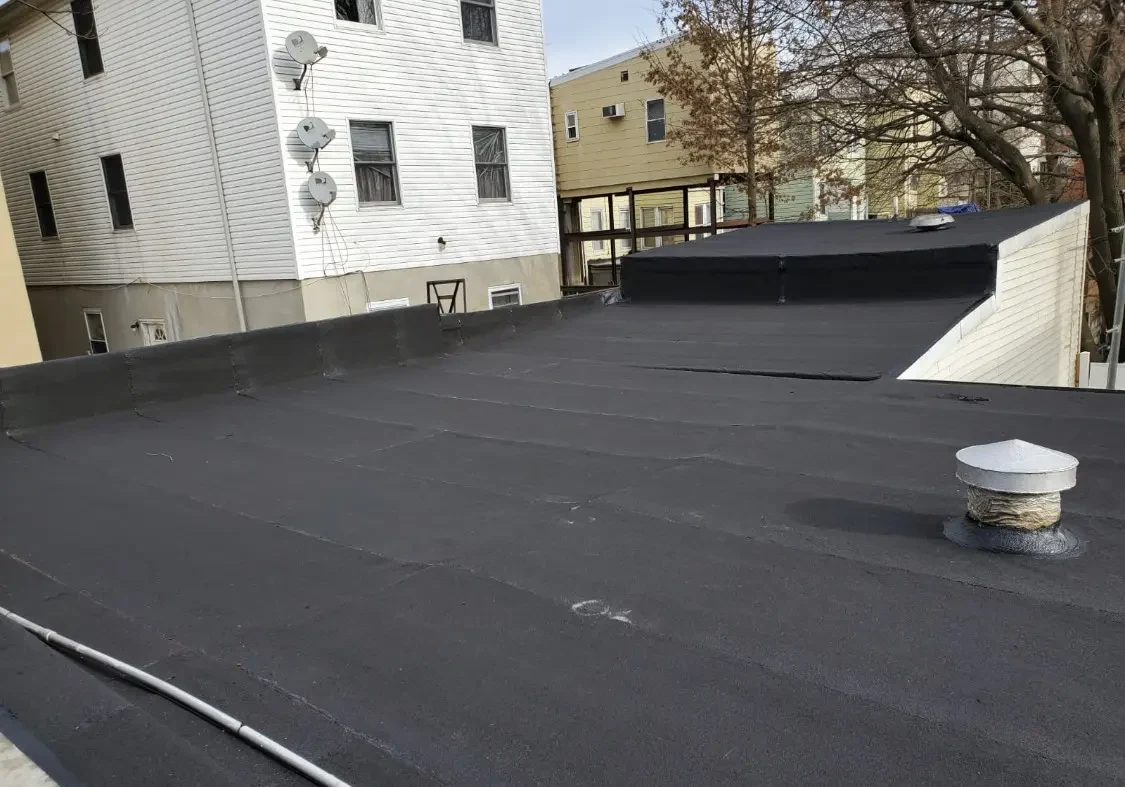
Commercial Reroofing in Fort Collins, CO
Commercial Roofing
Commercial Roofing Services
Full Reroofs for Fort Collins Buildings, Done in the Right Order
A commercial reroof only goes well when the tear-off, deck condition, and membrane choice all get decided before a single square goes down. We run reroof projects on buildings from Old Town Fort Collins to the office and flex parks along the Harmony Corridor, and the jobs that go sideways are almost always ones where somebody skipped the deck inspection step to save a week.
When a Roof Has Crossed From Repair Into Reroof Territory
Most owners call us for a leak repair first, which is the right instinct. But there's a point where patching stops making financial sense. If we're chasing leaks in three or four unrelated spots on the same roof, or the membrane has gone brittle and cracks when you fold a sample of it, patching is just deferring the same conversation six months out.
We look at patch density too. A roof with a dozen old repairs scattered across the field is telling you the membrane itself has aged out, not that it has a dozen unrelated problems. On buildings built in the 1990s and early 2000s around Midtown and College Avenue, we're now seeing original membranes hit the end of their service life at the same time the rooftop units are due for replacement, which usually settles the reroof-versus-repair question on its own.
Checking the Deck Before We Talk Membrane
Before we quote a membrane, we check what's under it. That means core cuts to check for wet insulation, and on older Old Town buildings with wood decking, a walk of the deck itself to find soft spots or rot around old rooftop unit curbs. Newer steel deck buildings out toward Harmony Corridor have different failure points, usually at fastener patterns and lap seams rather than the deck itself.
Wet insulation is the one that changes a bid the most. If a core cut comes back saturated, that insulation is coming out no matter what membrane goes on top, because trapping moisture under a new roof just moves the problem underground until it blisters back through.
Membrane Options for Harmony Corridor and Midtown Buildings
For most low-slope commercial roofs in this market we're specifying TPO or EPDM, with PVC coming up more often on buildings near breweries or restaurant exhaust where grease resistance matters. At 5,003 feet, UV exposure is harder on membranes than owners coming from lower elevations expect, so we factor that into which TPO single-ply thickness we recommend rather than defaulting to the cheapest mil rating.
For flat roofs on older masonry buildings downtown, modified bitumen still gets specified when the parapet detailing and roof penetrations favor a torch-applied or self-adhered system over a mechanically attached one.
- Deck inspection and core cuts to confirm substrate condition
- Wet insulation removal scope, called out separately from dry tear-off
- Membrane type and thickness matched to building use and rooftop equipment load
- Tapered insulation plan for drainage at low spots
- Flashing detail at every penetration, curb, and parapet
- Code-required insulation R-value for the reroof
Scheduling Around Front Range Weather
Hail season here runs roughly May through August, and we don't tear off a roof and leave it open overnight during that stretch if we can help it. We sequence reroofs in sections small enough to dry-in before a storm cell can build, which on the Front Range can happen with only a few hours of warning on a summer afternoon.
Winter has the opposite problem. Cold membrane doesn't seal the way it does at 60 degrees, so December and January reroofs get scheduled around forecast windows rather than a fixed calendar date. Owners who need a reroof done before a lease turnover should plan for that flexibility up front instead of locking a hard date in a contract.
Insulation and Code Requirements on a Reroof
A reroof today is more than a like-for-like membrane swap. Current energy code usually requires a bump in insulation R-value over what the original roof had, which changes the deck-to-membrane height and sometimes the flashing height at parapets and curbs too. We account for that during the bid instead of discovering it mid-project.
Tapered insulation gets specified more than owners expect, especially on older buildings where ponding has been an ongoing complaint. Building slope into the insulation layer during a reroof is far cheaper than trying to fix drainage after the fact.
Reroofing Questions We Get From Fort Collins Building Owners
How long does a commercial reroof take on a typical building here?
A single-story building in the 20,000 to 50,000 square foot range usually runs two to four weeks depending on deck condition and weather delays. Multi-tenant buildings with rooftop units in the way of the work take longer because we're sequencing around equipment access.
Do we have to close the building during a reroof?
No, in almost all cases. Reroofing happens above occupied space, and we coordinate noisy phases like tear-off and fastening around tenant schedules where we can, but the building stays open.
Can you reroof over the existing membrane instead of a full tear-off?
Sometimes, if the existing roof is dry, single-layer, and structurally sound. We call this a recover, and we'll tell you honestly if your roof qualifies rather than selling a recover on a roof that needs a real tear-off.
What's the best time of year to schedule a reroof in Fort Collins?
Late spring before hail season ramps up, or early fall after the worst of it has passed, give us the most predictable weather windows. We still work outside those windows, just with more contingency built into the schedule.
Will a reroof on an older building meet current code?
Yes. Any reroof we perform brings the insulation and assembly up to current code requirements regardless of what the original roof was built to, which is required on a reroof permit here.
Roof
GALLERY