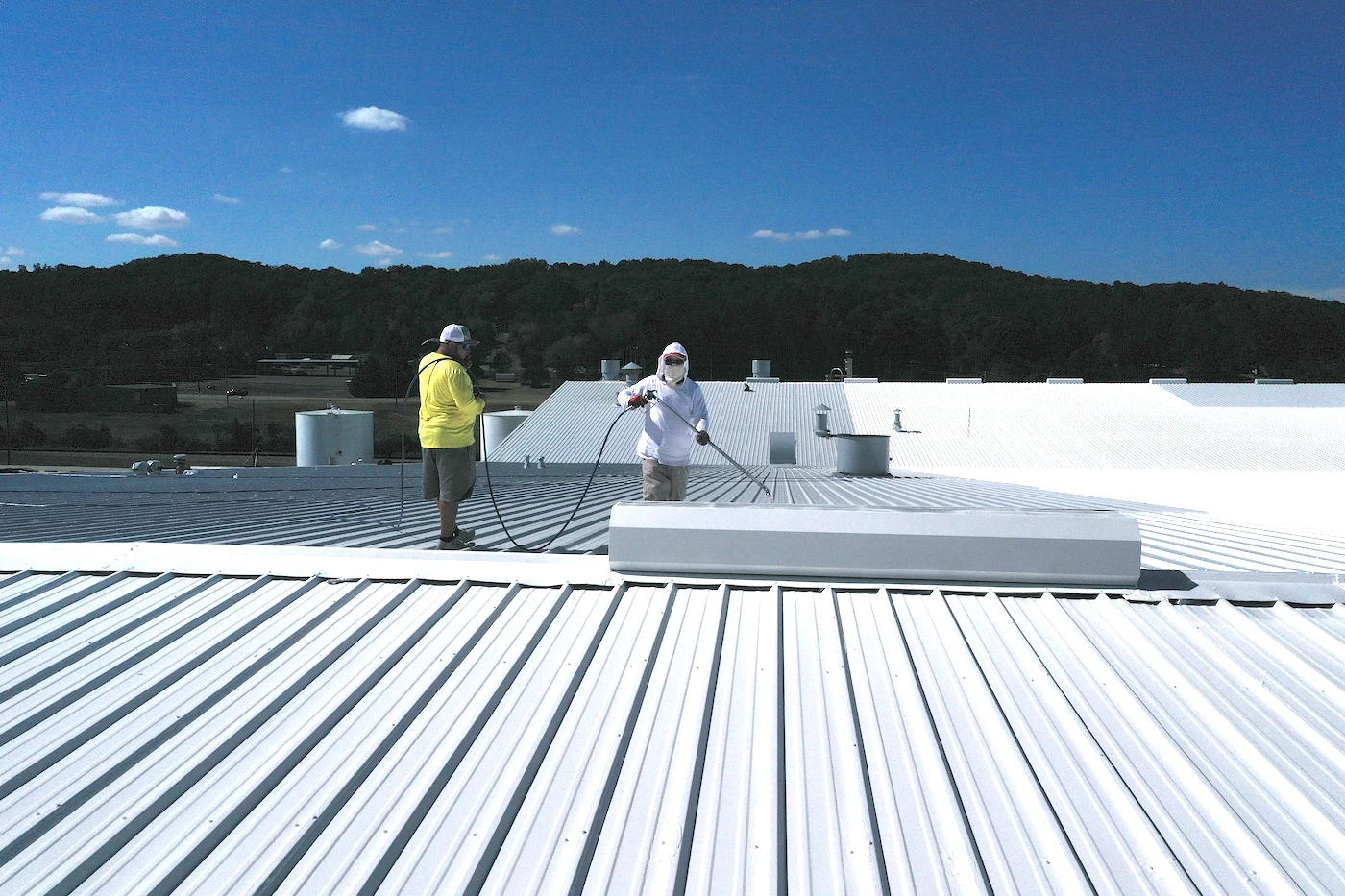
PVC Roofing Systems in Fort Collins, CO
Commercial Roofing
Roof Systems
PVC Membrane for Roofs That Take Chemical and Grease Exposure
PVC isn't the membrane we spec most often, but it's the one we reach for when a roof deck has to deal with something other than plain sun and hail. Grease-laden kitchen exhaust, solvent fumes near research labs, and rooftop equipment that vents anything other than clean air all point us toward PVC over TPO or EPDM.
Why Grease and Oil Matter More Here Than People Think
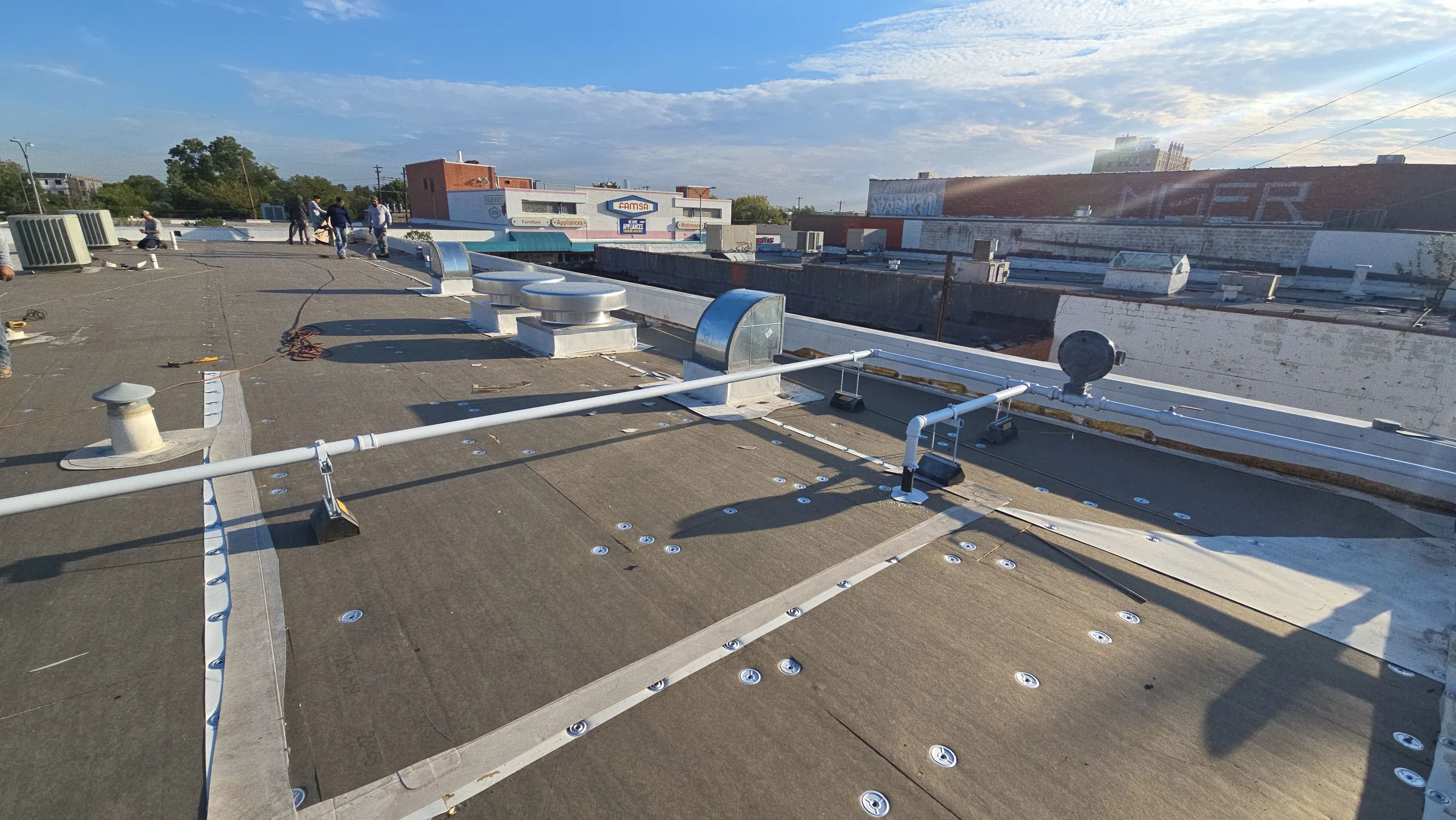
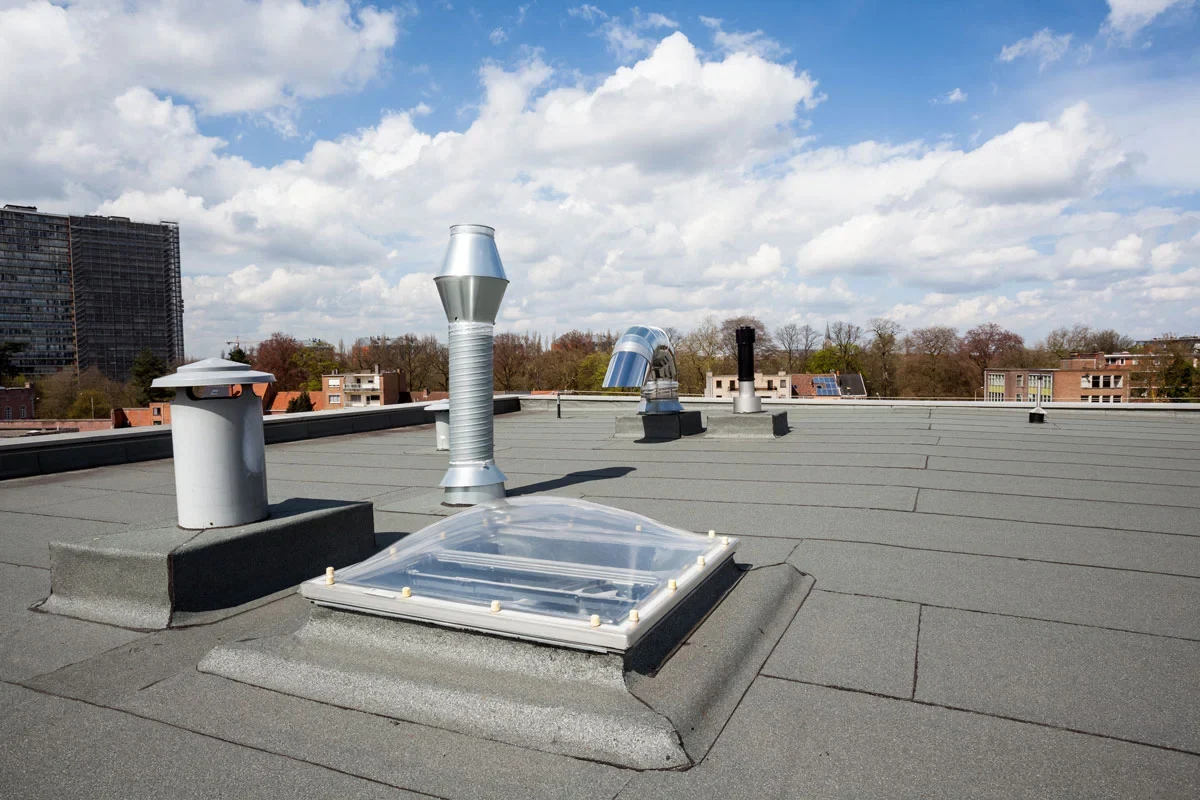
Fort Collins has a real concentration of breweries, distilleries, and food and beverage production, and every one of those buildings vents grease, yeast byproduct, or cooking exhaust across the roof surface near the kitchen or production line exhaust fans. TPO holds up fine against sun and hail but degrades faster than PVC when it sits under a steady film of fats, oils, and grease. We've inspected TPO roofs near restaurant exhaust stacks that show soft, swollen membrane within a few years, while PVC in the same exposure holds its integrity far longer. If a roof deck sits anywhere near a commercial kitchen hood, brewhouse exhaust, or a rooftop fryer vent, PVC earns its higher material cost.
The same logic applies to light industrial and manufacturing buildings where rooftop equipment vents process chemicals, or where solvent-based operations run below. PVC's chemical resistance profile handles that kind of exposure better than most alternatives on the market.
Welded Seams and Long-Term Watertightness
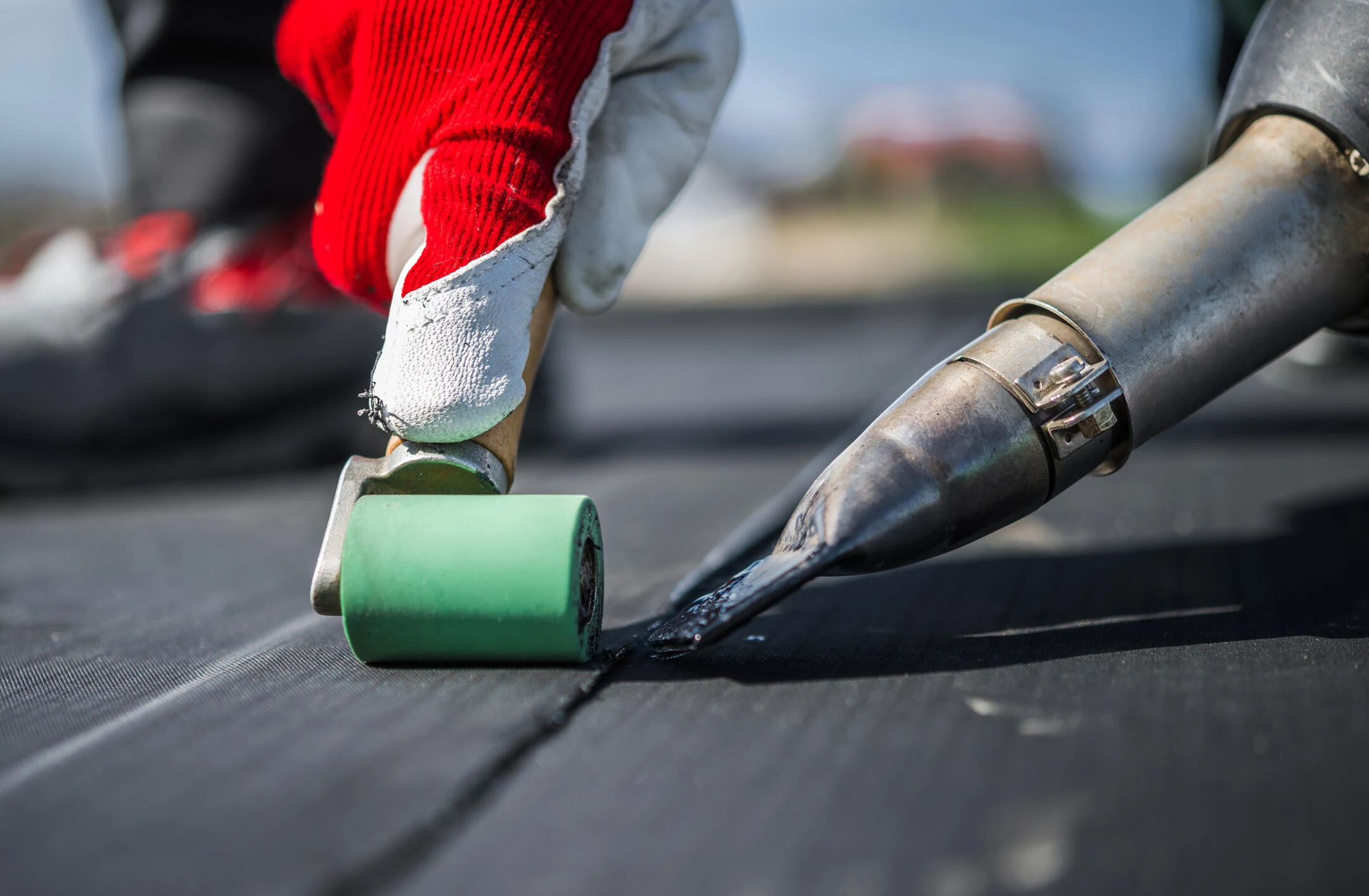
Like TPO, PVC seams get joined with hot-air welding rather than adhesive, which produces a homogeneous bond rather than a glued lap joint. We probe every welded seam on a PVC install, not a sample percentage, because a cold weld is invisible until it starts leaking, sometimes a year or more after installation. Reinforced PVC uses a polyester scrim inside the sheet for tear resistance, which matters on roofs with regular foot traffic from HVAC or exhaust equipment maintenance.
Plasticizer Migration: An Old Problem, Mostly Solved
Older PVC formulations had a reputation for plasticizer migration, where the compound that keeps the membrane flexible slowly leaches out and the sheet stiffens and cracks over time. That was a real issue in some 1980s and 1990s-era products. Current manufacturers use non-migrating plasticizer technology that largely eliminated the problem, but it's still worth knowing the history if an owner is comparing a modern PVC quote against a bad experience from an old roof decades ago. We don't gloss over it. It's a fair question and the honest answer is that the chemistry has changed.
Hail and Wind Performance
Reinforced PVC carries impact ratings comparable to reinforced TPO at similar thickness, and both perform better than unreinforced or thin membrane products under UL 2218 and FM 4473 testing. Wind uplift depends heavily on the fastening system and building height as much as on the membrane itself, and we run the same site-specific calculation for PVC that we do for any other mechanically attached system, factoring in exposure along open corridors near Timnath and Wellington where wind gets a straight run at the building.
Where We Spec PVC Most Often
The premium over TPO means we don't default to PVC on every job, but specific building types justify it consistently:
- Brewery and distillery production buildings with rooftop kitchen or process exhaust
- Restaurant and food-service buildings, including strip retail with shared kitchen exhaust penetrations
- Manufacturing buildings venting solvents, oils, or process chemicals through the roof
- Laboratory or research space tied to CSU-adjacent or medical office buildings
- Any roof scheduled for a long hold period where chemical exposure risk isn't going away
- Buildings with rooftop grease traps or exhaust fans positioned close to the membrane
Cost, Service Life, and Recover Considerations
PVC typically costs more per square than TPO, sometimes noticeably more depending on the reinforcement package and thickness. For a building without chemical or grease exposure, that premium usually isn't worth paying, and we'll say so rather than push the more expensive product. For a building that does have that exposure, the math flips, because a prematurely failed TPO roof under a grease-laden exhaust vent costs more in early replacement than the PVC premium would have.
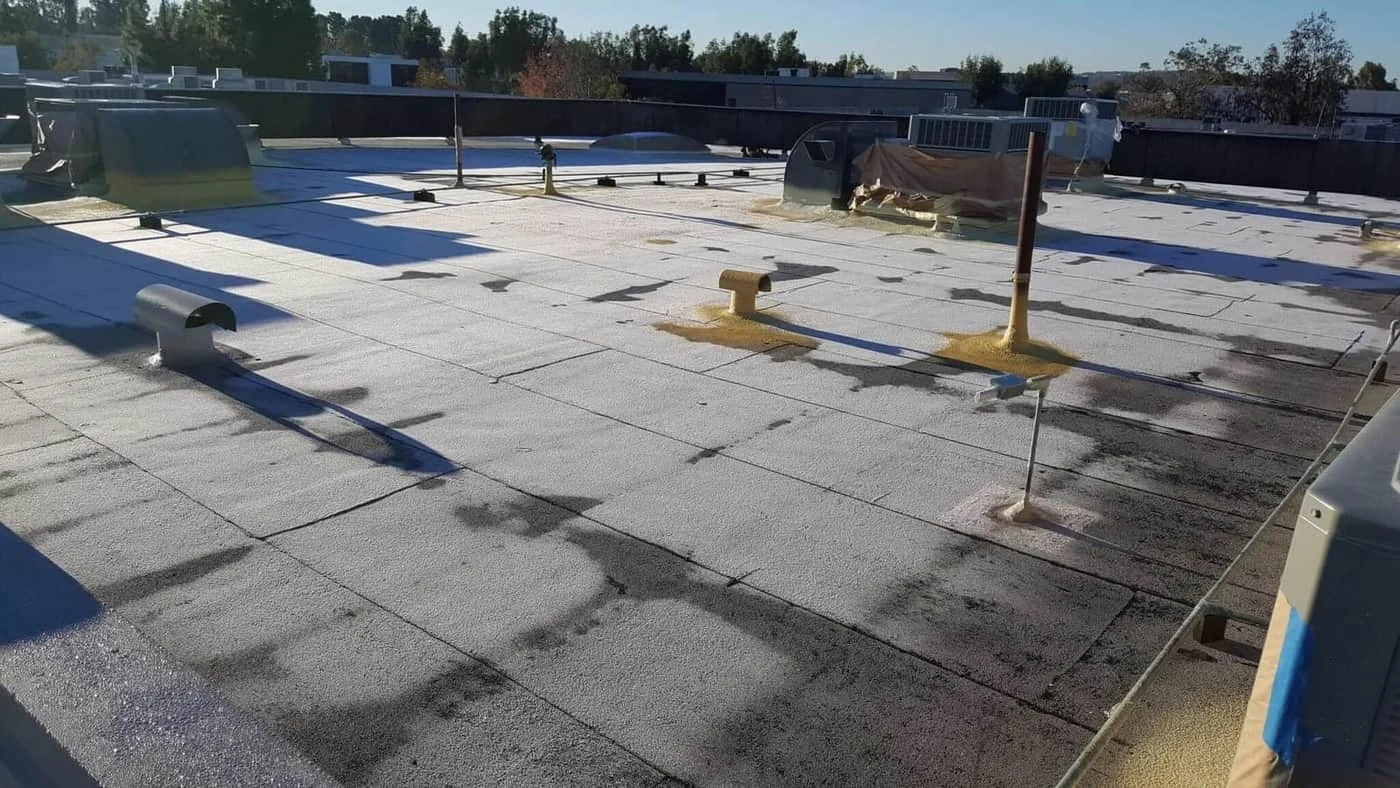
Re-covering an older BUR or modified bitumen roof with PVC requires checking the existing substrate for compatibility, since some older asphaltic products can react with PVC over time if they're in direct contact. We specify a proper cover board or separation layer in those cases rather than lay PVC directly over incompatible material, which is a detail some lower-bid contractors skip to save a step.
Questions We Get About PVC Roofing
Is PVC worth the extra cost over TPO for a normal office building?
Usually not, unless the building has specific chemical, grease, or exhaust exposure. For a standard office roof, TPO or EPDM typically makes more financial sense.
Does PVC handle Fort Collins hail as well as TPO?
Reinforced PVC and reinforced TPO perform similarly under standard impact testing at comparable thickness. Neither is hail-proof.
Can PVC go directly over an old built-up roof?
Sometimes, but we check for chemical compatibility with the existing asphaltic surface first and usually specify a separation layer.
How long does a PVC roof last on a brewery or food-production building?
With proper grease management and maintenance, well-installed PVC commonly runs 20 years or more even under exhaust exposure that would degrade TPO faster.
Does PVC come in colors other than white?
Yes, most manufacturers offer white, gray, and tan, with white the most common for reflectivity on this climate.
Roof
GALLERY