Silicone Roof Coating Systems in Fort Collins, CO
Commercial Roofing
Roof Systems
Silicone Coating: Buying Years Back on a Roof That Isn't Dead Yet
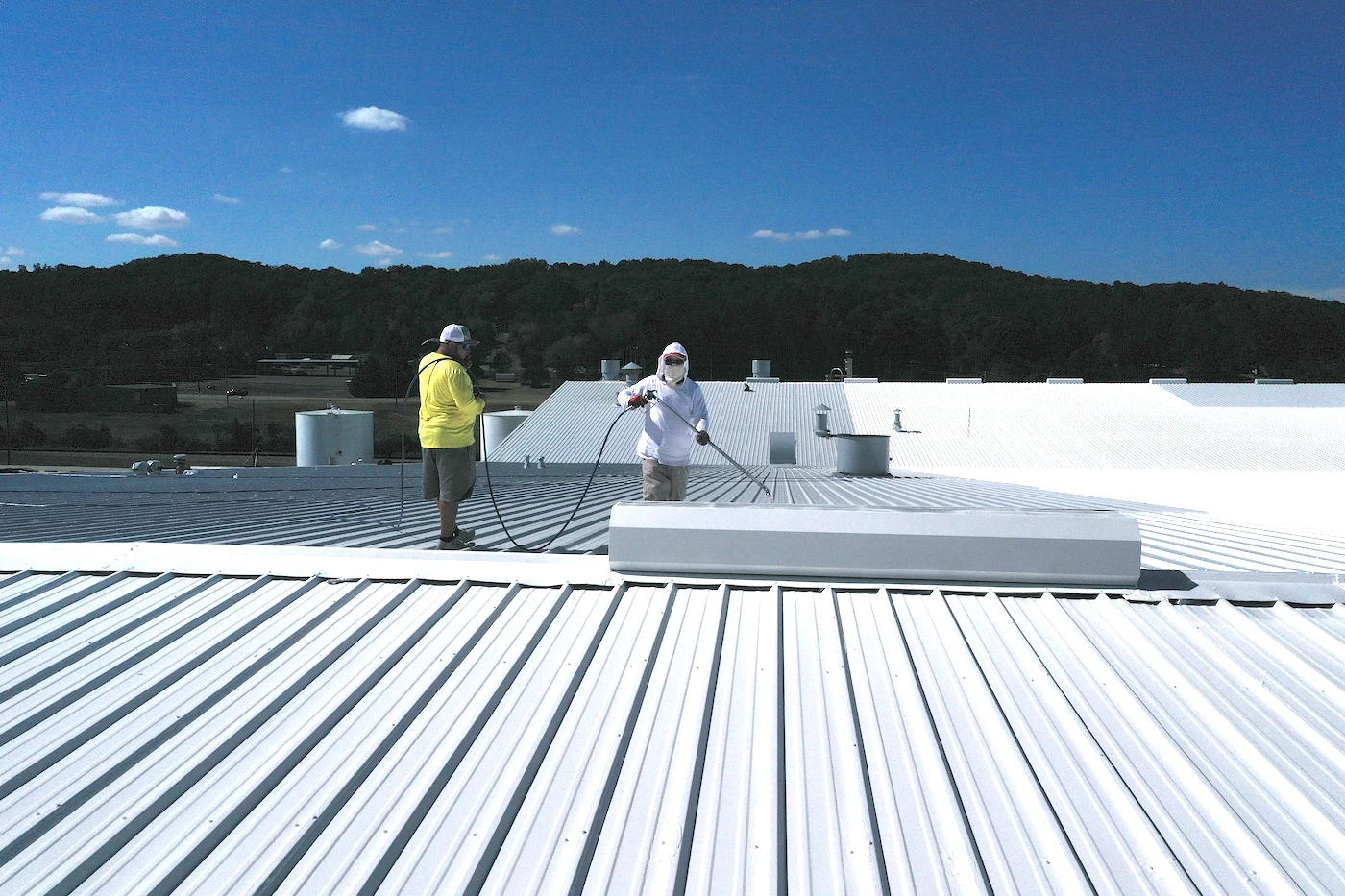
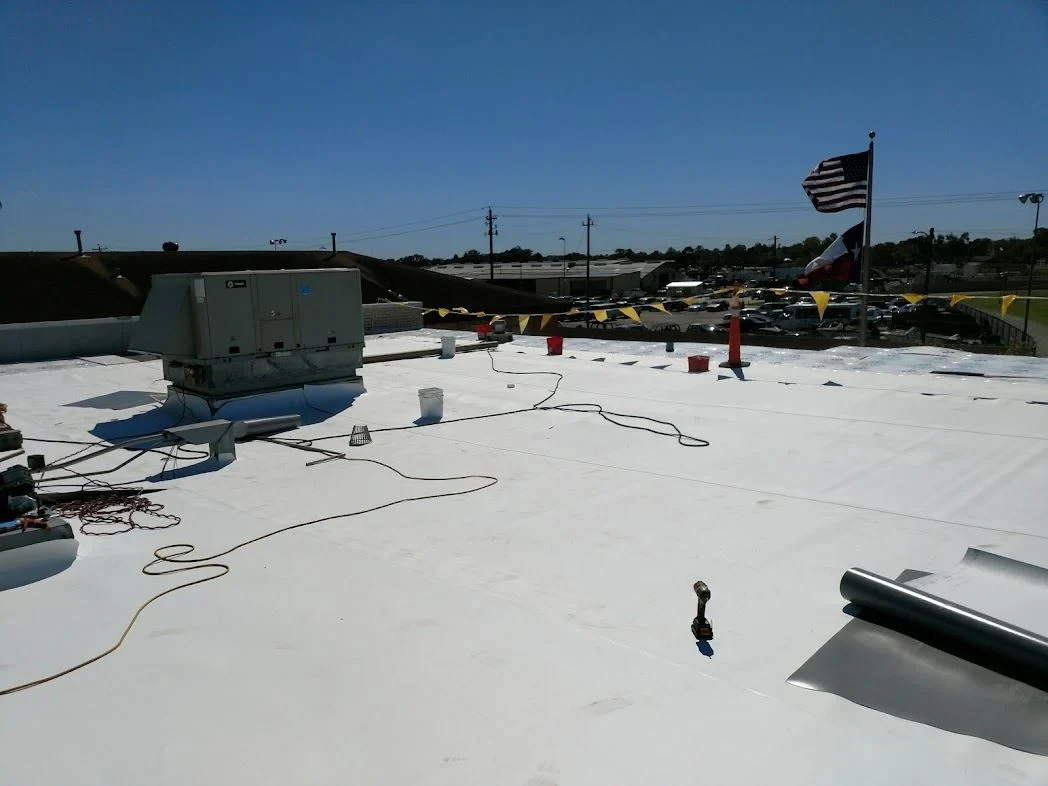
Not every roof that's showing its age needs a full tear-off. Silicone restoration coating is the option we bring up when a TPO, EPDM, modified bitumen, or even an old metal roof still has sound structure underneath but is losing UV resistance, developing surface cracking, or ponding water in spots that a full replacement budget can't justify yet.
Why Silicone Specifically, Not Acrylic
Acrylic coatings are cheaper and reflective, but they have one real weakness that rules them out on a lot of Fort Collins roofs: they soften and can wash out under standing water over time. Flat commercial roofs here almost always have at least a few low spots that pond after a spring snowmelt or a hard summer thunderstorm, and silicone tolerates that ponding without breaking down the way acrylic does. If a roof holds water anywhere on its surface, silicone is the coating chemistry we spec, full stop.
UV Stability at This Elevation
Fort Collins sits close to a mile of elevation, and UV intensity here runs meaningfully higher than at sea level. That accelerates degradation on aging membrane, particularly on south and west-facing slopes with no parapet shading. Silicone coatings resist UV breakdown better than most alternative chemistries, which is exactly the property that matters most once a roof is already showing chalking, hairline cracking, or granule loss from years of high-altitude sun exposure. A silicone recoat effectively resets the roof's UV clock without touching the structure underneath.
What Coating Can and Can't Fix
We're straight with owners about this because it's the most common misunderstanding we run into. Coating restores and extends a roof that's still structurally sound. It does not fix a wet substrate, rotted insulation, or a deck with active structural problems. Before we recommend coating over tear-off, we run a moisture survey, usually a combination of core cuts and infrared scanning, to confirm the insulation underneath is dry. Coating over wet insulation traps moisture, and the roof fails faster than if nothing had been done at all. If the survey comes back wet, we talk about targeted tear-out and recover instead of a blanket coating recommendation.
Hail: The Honest Limitation
This is the one place we push back hardest against coating sales pitches we've seen from other contractors. A silicone coating on its own doesn't meaningfully improve a roof's resistance to hail impact. It's a thin elastomeric layer over the existing membrane, not a new impact-rated system. On a roof with real hail exposure history, we'll still recommend coating for UV and waterproofing benefits, but we don't sell it as hail protection, because in hail alley that's the claim owners actually care most about and it isn't accurate.
Where Silicone Coating Makes the Most Financial Sense
Coating shines on buildings where the ownership horizon or budget doesn't support full replacement right now, or where the existing roof genuinely has years of service life left if UV and ponding damage get addressed:
- Aging TPO or EPDM roofs with surface chalking but no active leaks or structural damage
- Grain elevator and ag processing buildings around Eaton and Ault with tight capital budgets
- Older strip retail roofs where the ownership group needs to extend life a few more years before a bigger capital project
- Roofs with chronic ponding in isolated low spots, once slope or drainage corrections are addressed
- Metal roofs with rusting seams or fastener corrosion that need a monolithic waterproofing layer without full replacement
Application Requirements and Long-Term Cost
Silicone coating needs a clean, dry substrate to bond properly, and application windows depend on temperature and dew point far more than the calendar date. Front Range spring weather can swing from dry and warm to wet and cold within a single week, so we watch the forecast closely and won't apply coating if conditions risk trapping moisture under the film or preventing proper cure. That sometimes pushes a scheduled coating job back a week or two, which frustrates owners on a tight timeline but beats redoing a coating that never cured properly.
Silicone coatings aren't a one-time fix. Most systems are designed for a recoat cycle every 10-15 years depending on mil thickness and UV exposure, which owners should budget for as ongoing maintenance rather than a single capital expense. Compared against a full tear-off and replacement, though, the total cost over a 20-year window is usually still lower for a roof that's a good structural candidate for coating, since the underlying insulation and deck never get disturbed.
Questions We Get About Silicone Coating
Will silicone coating stop leaks that already exist?
No. Active leaks need to be located and repaired before coating goes down. Coating is a preventive and restorative measure, not a patch for existing failures.
Does coating protect against hail damage?
Not meaningfully. It restores UV resistance and waterproofing but doesn't add impact resistance comparable to a new membrane system.
How do you know if a roof is even a candidate for coating?
We run a moisture survey and visual condition assessment first. Wet insulation or structural deck problems rule out coating in favor of tear-out and recover.
Is silicone coating cheaper than a new roof?
Per project, yes, often significantly. Over the long run it requires recoat maintenance that a new system wouldn't need for many more years.
Can silicone be applied over metal roofing?
Yes, with proper substrate prep, silicone coating is a common restoration option for aging metal roofs with seam or fastener corrosion.
Roof
GALLERY